Xerxes’ Survey of the Land
During the famous expedition against the Greeks, Xerxes intended to enter Thessaly by this route. According to Herodotus, Xerxes sailed from Therma, which is now called Saloniki, to the mouth of the River Peneus. His purpose was to examine whether there was any passage into Thessaly, or whether one could be made by force or engineering.
After careful inquiry, Xerxes learned that the river had no other outlet and that its course could not be changed. When he understood this, he declared that the Thessalians had acted wisely in submitting to him and making peace. He believed that if the River Peneus had been blocked or stopped, the waters could have flooded the entire plain of Thessaly. This statement shows how closely the safety of the region depended on the natural flow of the river Sofia City Tour.
The River Peneus and Homer’s Praise
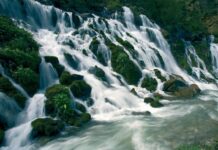
I found that the description given by Homer fits this river very well. The River Peneus has clear water and a clean, visible bottom. Its gentle and steady flow gives it a peaceful appearance, which matches the ancient poet’s praise.
The famous myth of Apollo and Daphne also seems very fitting in this place. Daphne was said to be the daughter of the River Peneus. According to the story, she was changed into a laurel, or bay tree, to escape Apollo. Even today, bay trees grow in great numbers along the banks of the river, making the old story feel closely tied to the land itself.
The Stone Bridge over the River
There is a fine stone bridge built over the River Peneus. It consists of nine strong arches and shows careful and intelligent design. Between the arches, there are openings and passages built into the solid stone. These allow water to pass through when the river is high.
This clever construction helps prevent damage during floods and protects the bridge from being carried away by strong currents. It is a good example of practical engineering adapted to the natural conditions of the river Great Military Feats on Mount Olympus.
Tents and Daily Life by the River
When the city was full of people, many Turks set up their tents in the open fields near the river and in the lower surrounding lands. These tents were made in various bright colors, and because they stood near a large mosque and close to the city, they created a very pleasant and lively view.
The tents were carefully arranged so that their coverings did not touch the ground. There was a space of about a yard left open, allowing fresh air to flow freely inside. In this way, the tents stayed cooler during the heat of the day. The people who lived in them often spent many hours drinking sherbet and coffee, resting and talking while enjoying the breeze from the river.
The Nearest Port and the Argonauts
The nearest important port to Larissa is that of Phthiotic Thebes, also known as old Pagasae. It lies in the Sinus Pagasiticus, which is also called the Gulf of Demetrias or the Gulf of Armiro. Near this place once stood the ancient city of Argos Pelasgicum.
From this region, the Argonauts are said to have first set sail on their famous voyage to Colchis. This harbor was therefore closely connected with some of the most celebrated stories of Greek history and legend.
Shipwreck at Cape Sepias
Not far from this coast lies the promontory called Sepias. Here occurred one of the greatest shipwrecks recorded in history. During a violent storm caused by an east wind, Xerxes lost five hundred ships. This disaster greatly weakened his naval power and stands as a reminder of the dangers of the sea, even for the mightiest rulers.